
The green, cyclable city
Dozens of local parks, the large Pentagonito park for running and walking, and a pioneering cycle network in Lima: San Borja has made outdoor quality of life its trademark. A rare setting for families and sports lovers.
Central · Residential · Family-oriented
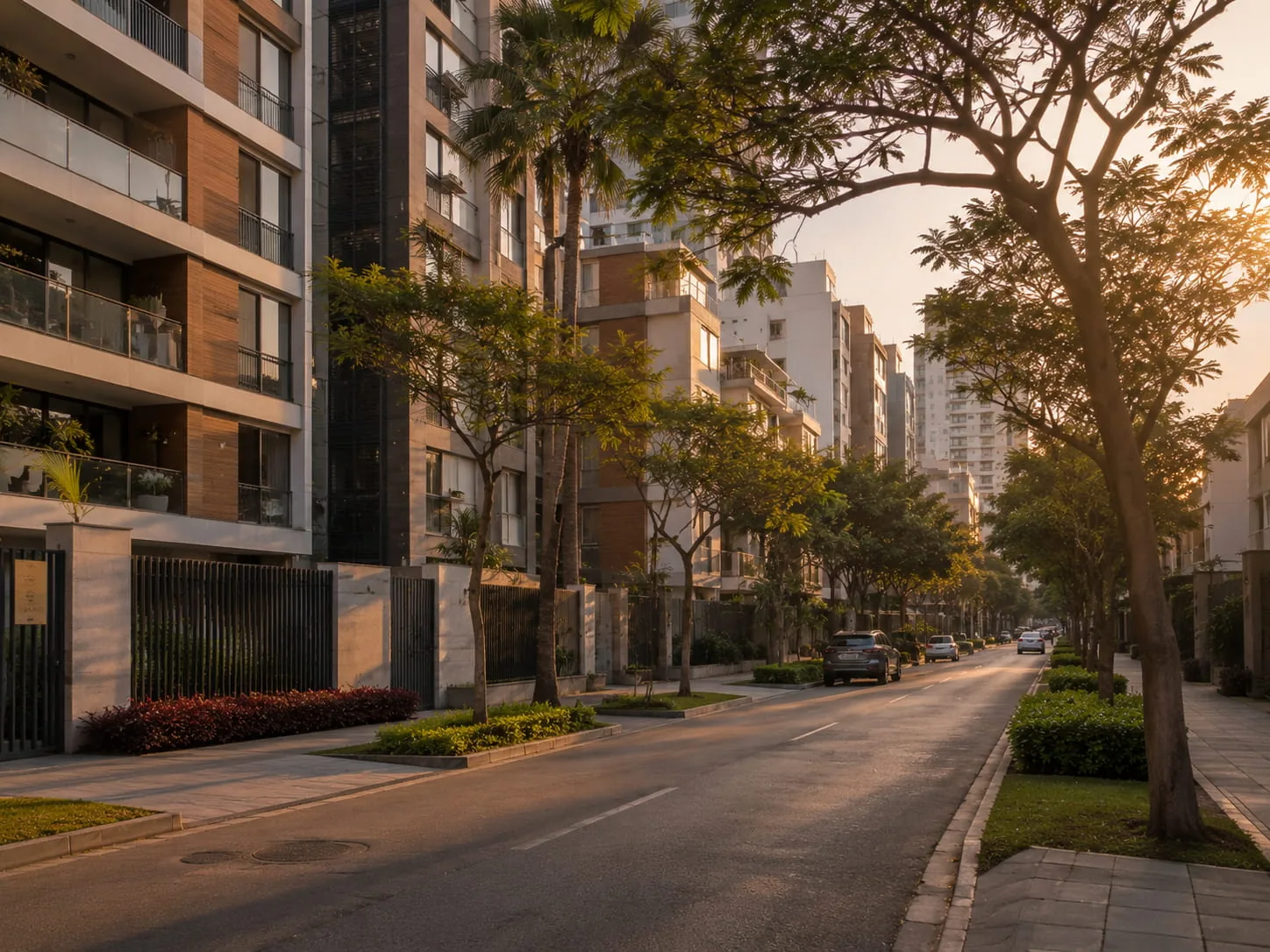
San Borja is a district designed for residential life: planned urbanism, wide tree-lined streets, plentiful public parks and one of Lima's most developed cycle-path networks. Around the "Pentagonito" and its running paths, the neighbourhood breathes a calm few central areas can offer.
It is also, paradoxically, a national cultural hub: the National Library, the Grand National Theatre, the Museum of the Nation and the Lima convention centre sit side by side along Avenida Javier Prado, served by metro Line 1 (La Cultura station).
For an investor, San Borja represents balance: an entry ticket between the premium districts and the entry markets, stable local rental demand, essentially family-driven, and a central position adjacent to San Isidro and Santiago de Surco.
Key strengths
Dozens of local parks, the large Pentagonito park for running and walking, and a pioneering cycle network in Lima: San Borja has made outdoor quality of life its trademark. A rare setting for families and sports lovers.
Grand National Theatre, National Library, Museum of the Nation, convention centre: Peru's great cultural institutions are in the district. Attending an opera or a major exhibition as a neighbour is one of San Borja's quiet luxuries.
Adjacent to San Isidro and Surco, crossed by metro Line 1 and Avenida Javier Prado: San Borja puts the essentials of modern Lima within direct reach, a durable asset for rental demand and resale alike.
Everyday life
Daily life in San Borja is that of an accomplished residential district: shopping at the supermarket or La Rambla mall, sport at the Pentagonito or on the cycle paths, schools and clinics nearby. The inner streets are calm, dotted with small parks where families and neighbours meet.
In the evening, the atmosphere stays peaceful: neighbourhood restaurants, cultural outings at the Grand National Theatre, dinners at one of the premium neighbours (San Isidro and its tables are adjacent). Residents go out normally, with the ordinary vigilance of any large city, and appreciate coming home to a quiet district.
This quality of life explains residents' loyalty: many families stay in San Borja from one generation to the next, giving the local rental market a discreet but real depth.
Getting around
San Borja touches San Isidro to the west, Surquillo to the south-west, Santiago de Surco to the east and south, and San Luis, Ate and La Victoria to the north. Miraflores is not adjacent, but is reached quickly via Surquillo or San Isidro.
Metro Line 1 crosses the district along Avenida Aviación (La Cultura and San Borja Sur stations, notably). Avenues Javier Prado, Aviación, Angamos Este and Primavera structure the connections. By car, journey times vary greatly with the hour.
Local life happens on foot or by bicycle thanks to the cycle network. The metro offers a rare alternative in Lima for crossing the city without depending on traffic; for the rest, ride-hailing apps fill the gap efficiently.
Property market
The housing stock mixes 1970s-1990s detached houses, mid-rise residential buildings and new developments gradually replacing houses along the main arteries. Surfaces are often generous: San Borja was designed for families, and its supply reflects it.
The most sought-after sectors: the quiet streets around the Pentagonito, the surroundings of Avenida San Borja Norte and San Borja Sur, and the zone adjacent to San Isidro (Chacarilla, shared with Surco, lies on its south-eastern edge). New builds near the metro attract growing demand from young professionals.
Sources: BCRP, Indicadores del mercado inmobiliario, Q4 2025 data (medians of listed prices, Urbania data, district average); Urbania Index, November 2025. Prices vary with the type of property, its condition and micro-location; these values are indicative and do not constitute a guarantee.
These figures make more sense in the wider context of the capital's market: our page on why invest in Lima sets out where rental demand comes from and what sustains it.
| Indicator | Value | Source · period |
|---|---|---|
| Median sale price (district) | ≈ USD 2,000/m² | BCRP · Q4 2025 |
| Median rent | ≈ USD 110/m²/year | BCRP · Q4 2025 |
| Price-to-rent ratio (PER) | ≈ 18.1 years of rent | BCRP · Q4 2025 |
| New & sought-after sectors | above the median | estimate, per property |
Rental strategies
The market's core: Peruvian families and professionals attached to the district's calm and schools, generally on 12-month renewable leases. Local demand is regular, less spectacular than tourist demand, but constant.
Recent developments near Line 1 and Javier Prado attract young professionals who prioritise car-free commutes. A developing segment, suited to compact, well-equipped units.
No yield is guaranteed: the result depends on the purchase price, occupancy, charges, management and taxation. The BCRP put the district's price-to-rent ratio at around 18 years of rent in Q4 2025 (district average): San Borja is chosen first for stability, not maximum yield.
Profiles
Parks, schools, cycle paths, calm: San Borja ticks the boxes of urban family life, as a main residence or as an investment aimed at family tenants.
For a long-term patrimonial strategy, backed by stable local demand and a well-managed central district, with a gentler entry ticket than San Isidro or Miraflores.
Daily life on foot and by bicycle, national culture next door, clinics nearby and calm at home: a setting well suited to a serene urban retirement in Lima.
San Borja is on your list. Still weighing it against other neighbourhoods? Our neighbourhood test compares all twelve districts against your budget, how you plan to use the property and the way you want to live. Ten questions, about three minutes.
A balanced view
San Borja is the choice of balance: a central, green and perfectly functional district, loyal local rental demand and an intermediate entry ticket. A family value for the core of a portfolio, to be selected street by street according to proximity to the metro, parks and schools.
It is one of its main strengths: numerous parks (including the large "Pentagonito" park), quiet tree-lined streets, cycle paths, schools and clinics nearby. San Borja was designed as a planned residential district, and Lima families are very attached to it.
Yes, it is one of the best-served districts in our selection: Line 1 of the Lima metro crosses the district (La Cultura and San Borja Sur stations, notably), and Avenida Javier Prado links it directly to San Isidro and La Molina. As everywhere in Lima, car journeys depend heavily on the hour.
In the fourth quarter of 2025, the median listed price in the district was around USD 2,000/m² (BCRP, Urbania data): an intermediate level between the premium districts (San Isidro, Miraflores) and the entry markets. New builds and sectors near the parks trade above this median.
Long-term rental, driven by solid local demand: families, professionals and civil servants seeking calm and the central position. Furnished short-term rental is less natural here than in Miraflores or Barranco, as the district attracts few tourists.
San Isidro is the premium business district, with markedly higher prices and a corporate, international clientele. San Borja is more family-oriented and local, with a more accessible entry ticket and a residential atmosphere. The two districts are adjacent: you cross from one to the other over Avenida Javier Prado or Calle Guardia Civil.
Yes, and of the first rank: the district hosts the National Library of Peru, the Grand National Theatre, the Museum of the Nation and the Lima convention centre. You attend a concert or the opera as a neighbour, even though evenings remain generally calmer than in Miraflores or Barranco.
Investing in San Borja?
Swiss Lima Property identifies and analyses properties in San Borja for European investors: family apartments near the parks, new developments close to the metro, stable patrimonial values. Browse our available properties or let's discuss your project. To go further, read our guide on property management in Lima with a local partner.
Our selected neighbourhoods
Lima's financial and diplomatic heart: El Olivar, corporate headquarters and residences of standing.
Analyse San Isidro →The large family district: Chacarilla, Monterrico, reputed schools and spacious homes.
Analyse Surco →The central, contrasted neighbour: market gastronomy, sectors in renewal and a gentler entry ticket.
Analyse Surquillo →