
Space to live
Houses with gardens, family apartments, residences with inner parks: Surco offers surfaces the coastal districts can no longer provide. For families who want space without leaving modern Lima, it is the first reflex.
Residential & family · One district, several worlds
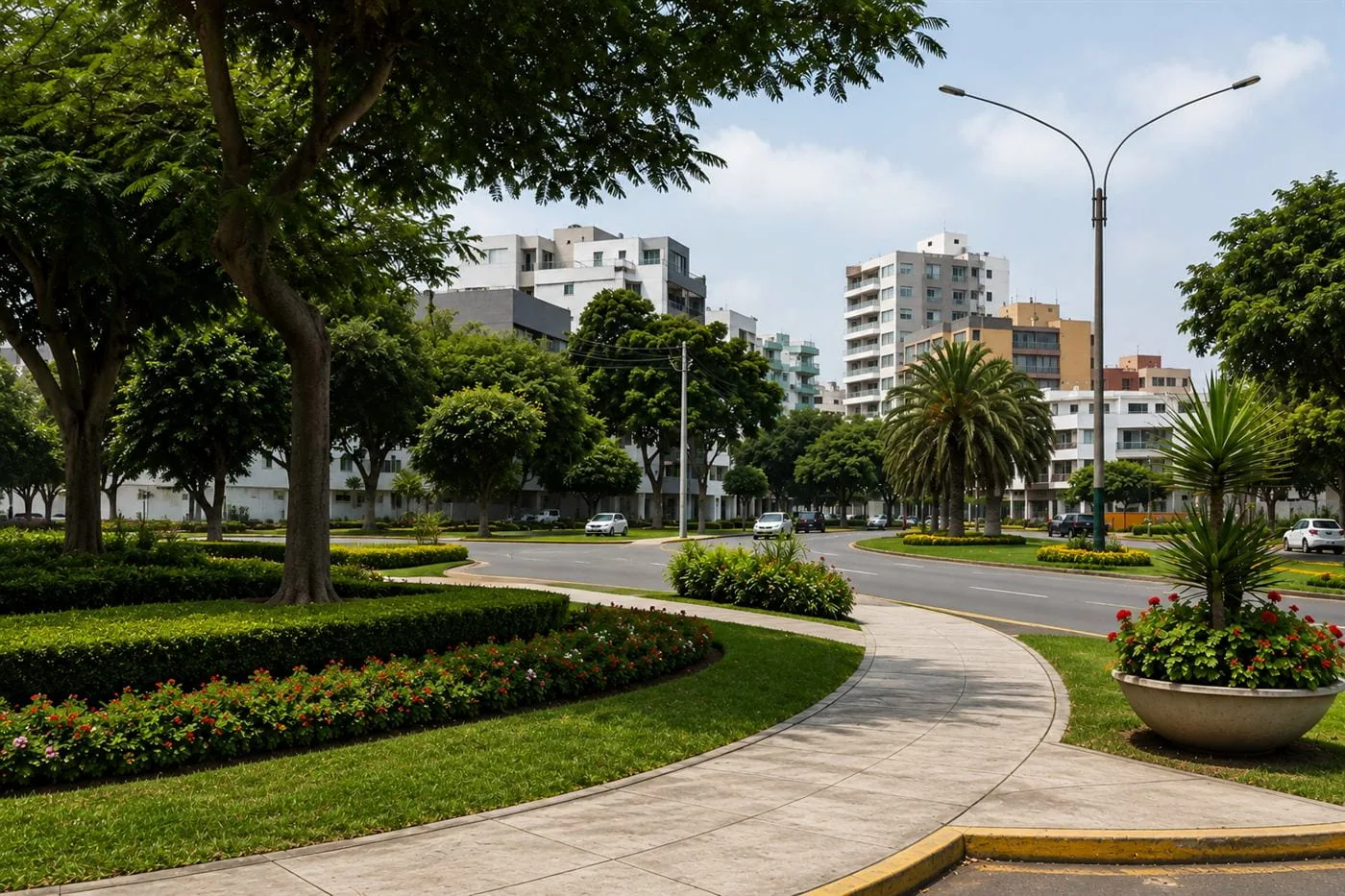
Santiago de Surco is one of the most extensive districts of modern Lima: roughly 35 km² stretching from the well-heeled urbanisations of Chacarilla del Estanque, on the edge of San Borja, to the historic centre of Surco Viejo and its quiet squares. In between: Monterrico and its universities, the Jockey Plaza, the country's largest shopping centre, and dozens of residential neighbourhoods.
It is family territory: houses with gardens, spacious apartments in secure residences, reputed private schools, including the Franco-Peruvian lycée in Monterrico, and the campuses of the Universidad de Lima, ESAN and UPC. This educational infrastructure anchors durable residential demand.
For an investor, Surco is a long-term market: regular local and family rental demand, gentler prices per m² than in the premium districts, but often large surfaces that raise the total ticket. The district's golden rule: analysis is done sector by sector, so different are the realities from one zone to the next.
Key strengths
Houses with gardens, family apartments, residences with inner parks: Surco offers surfaces the coastal districts can no longer provide. For families who want space without leaving modern Lima, it is the first reflex.
The Franco-Peruvian lycée, numerous sought-after private schools and the campuses of the Universidad de Lima, ESAN and UPC: Surco's educational offer attracts families for years at a time, a powerful and regular driver of residential and rental demand.
The Jockey Plaza and its hundreds of stores, supermarkets and clinics in every sector, family restaurants: the district functions autonomously. You could live here for weeks without leaving, a comfort tenants value.
Everyday life
Life in Surco is organised around its sectors: in Chacarilla, quiet tree-lined streets, cafés and upscale local shops; in Monterrico, the buzz of the university campuses and the Jockey Plaza; in Valle Hermoso, a green residential setting; in Surco Viejo, the feel of a historic centre with its square and church.
In the evening, the district lives quietly: family dinners, neighbourhood restaurants, shopping centres open late. The lively areas of Miraflores and Barranco are reached by car or ride-hailing app, with journey times depending on the hour. The vigilance to adopt remains that of any large city, in a district with a settled residential atmosphere.
For sports lovers and families, the sector parks, the Parque de la Amistad and the private clubs complete the picture of a comfortable, organised daily life.
Getting around
Surco touches San Borja and Ate to the north, La Molina to the east, San Juan de Miraflores and Chorrillos to the south, and Surquillo, Miraflores and Barranco to the west. The district bridges coastal Lima and inland Lima.
Javier Prado Este, the Panamericana Sur and avenues Benavides, Primavera and Tomás Marsano structure the district. Metro Line 1 runs along its south-western edge. Driving times vary greatly with the hour, especially on Javier Prado.
In most sectors the car remains the main tool, although Chacarilla and Monterrico offer shops and services within walking distance. Ride-hailing apps work well everywhere; short school runs are one of the district's big selling points for families.
Property market
The supply is the most varied of our selection: detached houses with gardens, spacious apartments in secure residences, penthouses in Chacarilla, new developments along the main arteries and simpler properties in the intermediate sectors. This diversity is reflected in prices: the district average masks significant gaps between sectors.
Chacarilla and the edges of San Borja concentrate the highest values; Monterrico attracts through its universities and services; the eastern and southern sectors offer more accessible entry tickets. With often generous surfaces, the total ticket needs calibrating: a moderate price per m² can correspond to a substantial overall budget.
Sources: BCRP, Indicadores del mercado inmobiliario, Q4 2025 data (medians of listed prices, Urbania data, district average); Urbania Index, November 2025. Prices vary with the type of property, its condition and micro-location; these values are indicative and do not constitute a guarantee.
These figures make more sense in the wider context of the capital's market: our page on why invest in Lima sets out where rental demand comes from and what sustains it.
| Indicator | Value | Source · period |
|---|---|---|
| Median sale price (district) | ≈ USD 1,870/m² | BCRP · Q4 2025 |
| Median rent | ≈ USD 94/m²/year | BCRP · Q4 2025 |
| Price-to-rent ratio (PER) | ≈ 19.8 years of rent | BCRP · Q4 2025 |
| Premium sectors (Chacarilla…) | above the median | estimate, per property |
Rental strategies
The market's core: Lima and expat families drawn by the schools, generally on 12-month renewable leases, sometimes longer when children's schooling anchors the family in the sector. Regular demand, attached to the district.
The Monterrico campuses (Universidad de Lima, ESAN, UPC) feed demand for small units and flat-shares nearby. A complementary, more rotational segment, reserved for well-located properties near the universities.
No yield is guaranteed: purchase price, vacancy, charges, management and taxation shape the net result. The district's price-to-rent ratio was the highest of our selection in Q4 2025 (≈ 20 years, BCRP, district average): Surco is chosen for residential stability more than cash flow.
Profiles
Reputed schools nearby, space, parks and services: the district is designed for family life, as a main residence or as a long-term rental investment.
For a long-term strategy backed by family and educational demand, with spacious properties that age well, in established sectors like Chacarilla.
The combination of international schools + secure residences + complete services makes Surco one of the first choices of expat families settling in Lima for several years.
Santiago de Surco is on your list. Still weighing it against other neighbourhoods? Our neighbourhood test compares all twelve districts against your budget, how you plan to use the property and the way you want to live. Ten questions, about three minutes.
A balanced view
Santiago de Surco is the choice of family life: space, schools and services in a district that functions autonomously. A long-term patrimonial market whose sheer size demands rigorous sector selection, the key to a successful investment in Surco.
Chacarilla del Estanque, on the edge of San Borja, for its established residential fabric; Monterrico, around the universities and the Jockey Plaza, for its centrality and services; and Valle Hermoso for its green setting. Each sector has its own property and price profile: the district is vast and must be read zone by zone.
It is one of Lima's reference family districts: spacious houses and apartments, reputed schools and universities, including the Franco-Peruvian lycée in Monterrico, shops and clinics. Many Lima and expat families settle here for the duration of their children's schooling.
In the fourth quarter of 2025, the median listed price in the district was around USD 1,870/m² (BCRP, Urbania data). Premium sectors such as Chacarilla trade above this district average; watch out also for surfaces, often large, which raise the total ticket.
Long-term rental, to families and professionals, generally on 12-month renewable leases, sometimes longer for settled families. Short-term rental is marginal here: the district is residential and not touristy, and many co-ownerships regulate it strictly.
No, and this is essential: at around 35 km², Surco is one of the most extensive districts of modern Lima, and its sectors differ greatly in setting, prices and rental demand. The analysis must be done sector by sector, even street by street. This diversity also makes it possible to find properties for very different budgets.
Often yes, especially in residential zones far from the shops. Monterrico and Chacarilla offer more services within walking distance, and metro Line 1 runs along the district's south-western edge. The choice of sector largely determines car dependence.
Investing in Santiago de Surco?
Swiss Lima Property identifies and analyses properties in Surco for European investors: family apartments in Chacarilla, properties near the Monterrico universities, characterful houses. Browse our available properties or let's discuss your project. To go further, read our guide on property management in Lima with a local partner.
Our selected neighbourhoods
The neighbour of houses and villas: space, international schools and often clearer skies than by the sea.
Analyse La Molina →The central, family-oriented residential district: green spaces, major cultural venues and a peaceful neighbourhood life.
Analyse San Borja →Lima's international seafront: malecón, gastronomy and one of the capital's most active rental markets.
Analyse Miraflores →