
Understanding the Peruvian Amazon
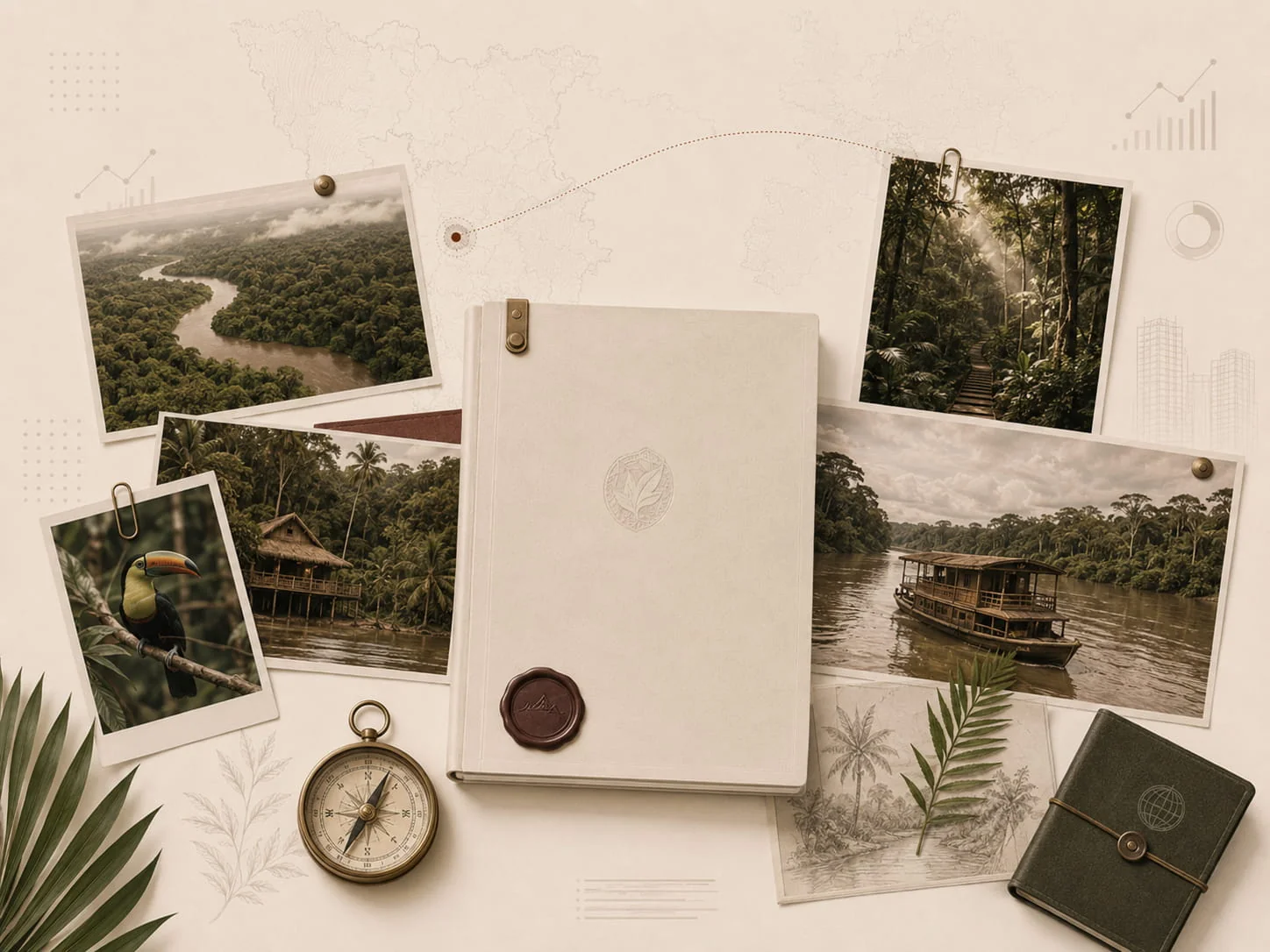
Peru reads as three great blocks: a desert coast, an Andean cordillera and a vast Amazonian zone that alone covers more than half of the national territory. That last one is far from uniform. It combines hot, humid lowland forests, rivers that serve as highways, large river cities, protected reserves, higher high-jungle areas and territories of transition between the Andes and the plain.
As a result, there is no single "Amazon experience". It varies according to the gateway you choose, the region, the season, the budget, the comfort sought and the time available. A cruise on the Amazon from Iquitos, a lodge stay at Tambopata from Puerto Maldonado or a few days of waterfalls around Tarapoto have almost nothing in common beyond belonging to the same great region.
Finally, it is worth remembering that the Amazon is not only a natural space. It is an inhabited territory, with cultures, languages, markets, a cuisine of its own, cities, a history and social and economic realities. Presenting it as an empty or "wild" backdrop would be both false and disrespectful.
The mistake to avoid
Do not choose "the Amazon" as a vague stop. Choose a specific gateway: Iquitos, Puerto Maldonado, Manú, Tarapoto, Pucallpa or another region. Each implies different logistics, a different level of comfort and a different kind of experience.
To place this region within the country as a whole, our guide on Peru's three great regions explains how the coast, the Andes and the Amazon fit together, and why geography shapes the travel experience so decisively.
The main gateways to the Amazon
Before going into detail, here is an overview of the main gateways and what sets them apart.
Iquitos, Loreto
River Amazon, reached by plane or by river, the Amazon itself, cruises, markets, the Pacaya Samiria reserve, lodges.
Puerto Maldonado, Madre de Dios
Practical access from Cusco or Lima, the Tambopata reserve, lodges, lakes, clay licks, birding and wildlife.
Manú, Cusco and Madre de Dios
A longer experience, exceptional biodiversity, more committed access, specialised operators, a protected national park.
Tarapoto, San Martín
More accessible high jungle, waterfalls, Amazonian cuisine, coffee and cocoa, nature and a more flexible stay.
Pucallpa, Ucayali
An Amazonian city, the Ucayali river, Shipibo-Konibo culture, the Yarinacocha lake and a river setting.
Chachapoyas, Amazonas
Cloud forest, Kuélap, Gocta, a transition between Andes and Amazon, a climate cooler than the lowland forest.
Lowland Amazon or high jungle?
The lowland Amazon corresponds to the great forest plains, the rivers and the hot, humid zones. The high jungle, or selva alta, refers to higher, often cooler areas between the Andes and the tropical forest. The landscapes, roads, climate and activities can be very different from one to the other.
Iquitos and Loreto, the river Amazon
Iquitos, capital of the Loreto region, is one of the great gateways to the Peruvian Amazon and a geographical curiosity in itself: it is the largest city in the world that cannot be reached by road. You arrive by plane or by river, by boat from other Amazonian ports, but no conventional road connects it to the rest of the country.
This effective island status has shaped its character. Iquitos owes its rise to the rubber boom of the late nineteenth and early twentieth centuries, of which azulejo-adorned houses and a singular urban architecture in the middle of the forest still remain. The Belén district and its market, the riverbanks, the river life and the ever-present mototaxis make up an Amazonian city in its own right, before you even set out for the forest.
It is from here that Amazon cruises, lodge stays and excursions to the Pacaya Samiria reserve depart. Iquitos deserves time in its own right, not just as a point of departure.
Which traveller is it for?
Iquitos suits travellers who want a very river-based Amazon, with navigation, markets, the river, lodges, cruises or access to Pacaya Samiria. It is a good option for a trip focused on rivers and Amazonian immersion.
Practical information, to be checked at the time of travel:
- Region: Loreto
- Access: by plane from Lima or by river, depending on available connections
- Suggested duration: 2 days in the city, plus 2 to 5 days minimum in a lodge or on excursion
- Ideal for: the river, cruises, the lowland Amazon, markets, Pacaya Samiria
- Point to watch: heat, humidity, river logistics, choice of operator
Pacaya Samiria, the forest of rivers and mirrored waters
Pacaya Samiria is one of the country's largest protected natural areas, managed by SERNANP, the national protected areas service. Located in the Loreto region, it is a national reserve of flooded forests, rivers, lakes and marshland, where water structures everything: movement, animal life and the mirror-like landscapes that have earned it the nickname "forest of mirrors".
It is generally reached from Iquitos or from Nauta, depending on the chosen itinerary, and visits go through operators authorised by the reserve. The experience is more river-based than on foot: you travel by boat, observe from the water, move slowly. Local communities live in and around the reserve, and several programmes rely on activities run with them, to be approached with respect.
Wildlife sightings, of river dolphins, caimans, monkeys or birds, are possible but never guaranteed: they depend on the season, the sector, the water level, the guide and each person's patience.
Why it matters
Pacaya Samiria shows an Amazon of rivers, water, reflections and flooded forests. The experience there is very different from a classic lodge around Puerto Maldonado.
Practical information, to be checked at the time of travel:
- Region: Loreto
- Category: national reserve, managed by SERNANP
- Access: from Iquitos or Nauta depending on the programme, with an authorised operator
- Suggested duration: several days
- Ideal for: navigation, nature, immersion, photography, patient observation
- Point to watch: access, authorised operators, season, sometimes basic comfort
Puerto Maldonado and Tambopata
Puerto Maldonado, capital of the Madre de Dios region, is often the most practical gateway to the southern forest. You reach it by plane from Lima, or from Cusco by a short flight or a long road, which makes it possible to add the Amazon to an Andean itinerary without upending the whole trip. The city itself is mainly a base: the essential happens along the rivers, in the lodges.
The Tambopata National Reserve, also managed by SERNANP, is its heart. Stays generally combine navigation on the Tambopata and Madre de Dios rivers, forest trails, lakes (cochas), and observation from towers or clay licks (collpas), those clay riverbanks where parrots and macaws gather at certain hours. Visits are made with authorised operators, an essential condition for accessing the reserve's regulated sectors.
Why choose Tambopata?
Tambopata is often one of the easiest options for adding the Amazon to an itinerary that includes Cusco and Machu Picchu. It allows you to experience the tropical forest without necessarily changing the whole trip.
Practical information, to be checked at the time of travel:
- Region: Madre de Dios
- Base: Puerto Maldonado
- Suggested duration: 3 to 4 days minimum
- Ideal for: a first Amazon stay, lodges, nature, birds, forest
- Point to watch: humidity, mosquitoes, heat, choice of operator, season, wildlife not guaranteed
Manú, biodiversity and a more committed immersion
Manú National Park, inscribed on the UNESCO World Heritage List as a natural property since 1987 and managed by SERNANP, is among the most biodiverse areas on the planet. Its singularity lies in a continuous altitudinal gradient, descending from the tropical Andes to the Amazon plain and crossing a succession of ecosystems rarely gathered in a single protected space.
That richness comes at a price: Manú must be earned. Access is longer than for Tambopata, the logistics heavier, the stays longer, and part of the territory is strictly protected, reserved for research or closed to visits. You go with specialised operators, over several days, often a week including travel. It is not necessarily suited to a short first trip to Peru.
Why it matters
Manú illustrates Peru's ecological depth: tropical mountains, forest, rivers, biodiversity and protected territories. It is an exceptional destination, but one that demands more time, preparation and respect for conservation rules.
Practical information, to be checked at the time of travel:
- Regions: Cusco and Madre de Dios depending on sector and access
- Category: national park and UNESCO World Heritage site
- Suggested duration: several days, often 5 to 7 days or more depending on the programme
- Ideal for: biodiversity, immersion, in-depth nature travel
- Point to watch: access, humidity, comfort, operator, health, season, regulation
Manú also features among the properties presented in our guide on UNESCO World Heritage sites in Peru.
Tarapoto and San Martín, a more accessible Amazon
Tarapoto, in the San Martín region, offers a completely different approach to the forest. Located in the high jungle, it enjoys a warm climate without the extreme humidity of the lowlands and, above all, far better accessibility: the city is connected by road and by flights from Lima. You do not enter an expedition here, but a flexible nature stay.
The surroundings concentrate waterfalls such as Ahuashiyacu, lagoons such as Laguna Azul, the Lamas area with its forest Quechua community, or Moyobamba and the Alto Mayo zone. The region produces coffee and cocoa, developed by local supply chains, and Amazonian cuisine is well represented. The atmosphere is more relaxed and less "expedition" than Manú or Pacaya Samiria.
It would nonetheless be misleading to present Tarapoto as a deep Amazon comparable to Manú. It is an accessible, warm and pleasant Amazon, ideal for a nature-and-relaxation stay, but it does not replace an immersion in the lowland forest.
Which traveller is it for?
Tarapoto often suits travellers who want an Amazonian atmosphere without heavy logistics: waterfalls, nature, cuisine, excursions and a more comfortable stay.
Practical information, to be checked at the time of travel:
- Region: San Martín
- Access: by plane from Lima or by road, depending on available connections
- Suggested duration: 3 to 5 days
- Ideal for: accessible nature, waterfalls, cuisine, a relaxed stay
- Point to watch: heat, rainy season, winding local roads, choice of excursions
Pucallpa and Ucayali
Pucallpa, capital of the Ucayali region, is another Amazonian gateway, less conventional for a first trip. A river city set on the Ucayali, it lives to the rhythm of trade, timber and the river. Nearby, the Yarinacocha lake is a place of life and leisure, as well as a point of contact with Shipibo-Konibo culture, whose crafts, textiles and geometric patterns are recognised well beyond the region.
Encounters with indigenous peoples should be approached with respect and discernment, through initiatives that genuinely involve them rather than as an attraction. Pucallpa is aimed more at travellers who want to step off the best-known circuits, but it requires more preparation and a good grasp of local realities.
A less conventional Amazon
Pucallpa may interest travellers who want to step off the best-known circuits, but it requires more preparation and a respectful approach to local realities.
Practical information, to be checked at the time of travel:
- Region: Ucayali
- Suggested duration: depending on the project, rather within a more in-depth trip
- Ideal for: urban Amazonian culture, the river, crafts, a different kind of stay
- Point to watch: preparation, safety depending on areas, heat, relevance for a first trip
Chachapoyas, Amazonas and cloud forest
The Amazonas region, of which Chachapoyas is the capital, is misleading: its name evokes lowland forest, but it belongs to a completely different world, that of cloud forest and mountain relief. Chachapoyas is a small highland town, with a cool climate, surrounded by green, humid valleys far removed from the image of the hot Amazon.
It is from here that you reach Kuélap, a fortified city of the Chachapoyas culture, and the Gocta waterfall, one of the highest in the country. The experience is very different from Iquitos or Tambopata, and access is longer from Lima. The region lends itself better to a second trip or an itinerary devoted to northern Peru.
Amazon does not always mean extreme heat
Some areas associated with the Amazon or the high jungle offer mountain landscapes, humid forests and cooler valleys. Chachapoyas is a good example.
Practical information, to be checked at the time of travel:
- Region: Amazonas
- Suggested duration: a minimum of 3 to 4 days
- Ideal for: Kuélap, Gocta, nature, slow travel, northern Peru
- Point to watch: access, travel time, mountain weather, organisation
Chachapoyas is also presented in our guide on the most beautiful cities in Peru.
What can you experience in the Peruvian Amazon?
The possible experiences overlap from one region to another, but their intensity and form vary. Here are the main ones, presented without promises or exaggeration.
Lodge stay
This is the most common format: accommodation in the forest, guided excursions, often meals included, trails and boat outings. Comfort varies enormously from one establishment to another, from very basic to high-end. It is better to read the actual conditions carefully before booking than to rely on photographs alone.
River navigation
In the Amazon, rivers are routes of travel as much as landscapes. The experience changes with the water level: at Pacaya Samiria, around Iquitos, on the Ucayali or in Madre de Dios, navigation opens up otherwise inaccessible areas and imposes its own rhythm.
Wildlife observation
Birds, monkeys, caimans, insects, amphibians and sometimes larger mammals inhabit the forest, but many remain hard to see. No sighting can be guaranteed: wild fauna is earned through silence, patience and respect. A good guide makes all the difference here.
Birdwatching
Peru is one of the world's great countries for birdwatching, and the Amazon contributes greatly, particularly around the clay licks where parrots and macaws gather. It is an activity of patience, often early in the morning, that rewards early risers.
Amazonian markets and cuisine
Amazonian markets overflow with fruit, river fish, plants and crafts specific to the region. In the kitchen, you find juane, patarashca, tacacho con cecina, inchicapi, chonta, cassava, plantain, Amazonian fruits, cocoa and, in some areas, coffee. It is a full part of Peruvian culture, explored in our guide on Peruvian gastronomy.
Cultural encounters
Communities live in the Amazon, with their crafts and their knowledge. When well designed, these encounters are among the most memorable of a trip, provided you ask consent before taking any photograph, do not turn people into an attraction, and favour operators that genuinely involve the communities.
The right attitude
In the Amazon, the quality of the experience often depends on slowness, listening and respect. It is not a backdrop to consume quickly, but a living territory.
When to visit the Peruvian Amazon?
The Amazon can be visited all year round, but the experience changes markedly with the period. It is better to think by region and by type of activity than by a universal calendar.
Wetter period
Generally from November to April depending on the region, it brings more frequent rain, higher rivers and dense vegetation. Navigation is sometimes easier in certain areas, as the water opens up passages, but trails are wetter and the heat remains marked.
Relatively drier period
Generally from May to October depending on the region, it sees lower rivers, sandbanks appearing and often more walkable trails, which makes land-based activities easier. Rain remains possible, however: there is no "rain-free season" in the Amazon.
The friajes
A friaje is an inflow of cold air from the south of the continent that can cause a sudden drop in temperature, wind and rain, mainly in the southern Amazon such as Madre de Dios, but also more widely depending on the intensity of the episode. According to SENAMHI, the national meteorological service, several friajes occur each year, often between May and August, with nights that can turn cool where you expected heat. Packing a warm layer is therefore not superfluous, even in the forest.
On the weather, remember
The best period depends on the experience you seek: navigation, trails, observation, comfort, heat, river levels or lodge availability. You have to think by region, not just by month.
Our guide on when to visit Peru details these seasonal trends for the whole country, the Amazon included.
Health, safety and precautions
This section gives general guidance. It in no way replaces medical advice, which depends on your precise itinerary, your state of health and the areas visited.
Consult a health professional before departure
A travel medicine centre or a qualified professional can discuss, according to your situation, vaccines, the risk of malaria or other diseases depending on the area, your personal treatments, or precautions specific to pregnancy, travelling with children or a particular medical condition. This guide gives no prescription.
Mosquitoes and insects
Long, light clothing, a suitable repellent and, if needed, a mosquito net reduce exposure. Also check the lodge's conditions on this point.
Heat and humidity
Regular hydration, breathable clothing, a slow pace and sun protection help you cope with a climate that can be demanding, especially in the first few days.
Water and food
Favour drinking water, stay careful with food and choose serious establishments, in the city as well as in the lodge.
Transport and safety
Choosing reliable operators, avoiding improvisation, checking schedules, using recommended transport and avoiding areas advised against are matters of ordinary prudence, valid everywhere but all the more useful here, where logistics are river-based and sometimes slow.
Respecting local rules
Not straying from authorised trails, not feeding or touching animals, taking nothing away and following the instructions of rangers and guides protect both the environment and the visitor.
This guide does not replace medical advice
Health recommendations depend on your exact itinerary, your state of health, the season and the areas visited. Consult a travel medicine centre or a qualified professional before departure.
How to choose a responsible operator?
In the Amazon, more than anywhere else, the choice of operator determines the quality and safety of the experience. In protected areas such as Tambopata, Pacaya Samiria or Manú, only operators authorised by SERNANP may conduct visits: that is a decisive first filter.
Beyond authorisation, several criteria distinguish a serious operator: trained guides, reasonably sized groups, a clear programme and transport, an unambiguously stated level of comfort, proper waste management, respect for wildlife, no feeding of wild animals, no forced contact with communities, safety conditions and emergency procedures, and transparent communication.
Questions to ask before booking
- Is the lodge or operator authorised to operate in the area visited?
- Which transport is included, and which is at your own expense?
- How many people per guide?
- What is the real level of comfort of the accommodation?
- Are meals included, and which ones?
- What is the policy in case of rain or rising waters?
- Are the activities suitable for children or less athletic people?
- Are boots, ponchos or equipment provided?
- In which language do the guides speak: Spanish, English, possibly French?
- How are local communities involved and paid?
Which itinerary to choose for your trip?
Depending on your plan, some gateways stand out more naturally than others.
First trip with Cusco and Machu Picchu
Puerto Maldonado and Tambopata, often easier to combine with Cusco. Duration: 3 to 4 days minimum.
Rivers and deep Amazon
Iquitos with a lodge or Pacaya Samiria. Duration: 4 to 6 days or more.
In-depth nature trip
Manú, for a more committed profile. Duration: 5 to 7 days or more.
Comfortable and accessible
Tarapoto: nature, waterfalls, cuisine and high jungle. Duration: 3 to 5 days.
A different cultural trip
Pucallpa and Ucayali, to consider mainly for a specific, well-prepared stay.
Second or third trip
Chachapoyas and Amazonas, Tarapoto, Pacaya Samiria, Manú or Pucallpa depending on your wishes.
Family or less athletic trip
A comfortable lodge, short access and adjustable activities; avoid programmes that are too long or too isolated.
Do not overload the itinerary
The Amazon takes time. To make the most of it, it is better to plan fewer stops and accept a slower pace.
Summary table of Amazon destinations
This table summarises, for guidance only, the main destinations presented in this guide. The "point to watch" column flags what deserves attention when planning, without any judgement on the destination itself.
| Destination | Region | Main experience | Access | Suggested duration | Ideal for | Point to watch |
|---|---|---|---|---|---|---|
| Iquitos | Loreto | River Amazon, river, markets | Plane or boat | 4 to 7 days | Cruises, rivers | River logistics, heat, operator |
| Pacaya Samiria | Loreto | Reserve of rivers and flooded forests | From Iquitos or Nauta | Several days | Navigation, immersion | Authorised operator, season, basic comfort |
| Puerto Maldonado | Madre de Dios | Base for the southern lodges | Plane, or road from Cusco | 3 to 4 days | Combining with Cusco | Humidity, mosquitoes, operator |
| Tambopata | Madre de Dios | Lodges, trails, clay licks, birds | From Puerto Maldonado | 3 to 4 days | A first forest stay | Authorised operator, wildlife not guaranteed |
| Manú | Cusco and Madre de Dios | Biodiversity, committed immersion | Long, specialised operator | 5 to 7 days or more | In-depth nature | Access, comfort, regulation |
| Tarapoto | San Martín | High jungle, waterfalls, cuisine | Plane or road | 3 to 5 days | Accessible nature | Heat, rain, local roads |
| Pucallpa | Ucayali | River city, culture, crafts | Plane or road | Depending on the project | In-depth travel | Preparation, safety by area |
| Chachapoyas | Amazonas | Cloud forest, mountain town | Long from Lima | 3 to 4 days | The north, slow travel | Altitude, travel time, weather |
| Gocta and Kuélap | Amazonas | Waterfall and fortified city | From Chachapoyas | 1 to 2 days each | Nature and archaeology | Walking, access, visiting conditions |
Practical advice before you go
Choose the right gateway
Do not choose "the Amazon" in general, but a specific region according to your time, your access and the kind of experience you want. It is the most decisive decision of the trip.
Plan for at least three days
For a lodge or reserve stay, a single night is rarely enough: travel time, acclimatisation and the slow rhythm of the forest call for a few days.
Accept the unexpected
Rain, heat, insects, river delays and programme changes are part of the experience. A flexible mindset changes everything.
Travel light but well equipped
Long, breathable clothing, a rain jacket, a head torch, a power bank, waterproof protection for documents, suitable shoes, personal medication and a basic kit as advised medically cover the essentials.
Protect your devices
Humidity, rain and mud can damage phone, camera and documents: bring waterproof protection.
Do not promise wildlife to children
Present the forest as an experience of listening and observation, not as a zoo where animals would be guaranteed.
Check protected-area rules
Entries, authorised operators, open sectors, visiting fees and instructions can change from one season to the next: check with SERNANP.
Respect the communities
Ask before photographing, avoid intrusive visits and favour respectful operators that genuinely involve residents.
Keep a buffer day
Especially before an international flight or an important stage: a river or weather delay happens quickly.
Key points
- The Peruvian Amazon is not a single destination.
- Iquitos offers a very river-based, Amazonian experience.
- Puerto Maldonado and Tambopata are often easier to combine with Cusco.
- Manú is exceptional, but more demanding.
- Tarapoto offers a more accessible and more flexible Amazon.
- Pucallpa and Ucayali suit a more specific trip.
- Chachapoyas belongs to a different logic: cloud forest, mountains and northern Peru.
- The Amazon can be visited all year round, but the experience varies with rain and river levels.
- Friajes can cause a sudden drop in temperature, especially in the southern Amazon.
- Choosing a responsible, authorised operator is essential.
- You must never promise the sighting of wild animals.
- A good Amazon experience takes time, respect and preparation.
Frequently asked questions
Planning a trip?
SwissLima, our Peru travel guide, compares the gateways to the Peruvian Amazon: Tambopata, Manu, Iquitos and Tarapoto. Read more: Which Amazon would you like to experience?.
Which is the best region to discover the Peruvian Amazon?
There is no single best region. For a deep river experience, Iquitos and Pacaya Samiria; for an easy first stay to combine with Cusco, Puerto Maldonado and Tambopata; for biodiversity, Manú; for an accessible Amazon, Tarapoto. The right choice depends on your time, your access and your wishes.
Iquitos or Puerto Maldonado: which to choose?
Iquitos offers a very river-based Amazon, with the river, markets, cruises and access to Pacaya Samiria, but it is reachable only by plane or boat. Puerto Maldonado is easier to combine with a Cusco and Machu Picchu itinerary, with forest lodges at Tambopata. The former favours rivers, the latter convenience.
Is Tambopata suitable for a first trip?
Yes. It is often one of the simplest options for discovering the tropical forest, thanks to access from Puerto Maldonado and the relative proximity of Cusco. Three to four days in a lodge allow a fine immersion without heavy logistics.
Is Manú worth it?
For nature and biodiversity enthusiasts, Manú is an exceptional destination. But access is long, stays often last five to seven days and the regulation is strict. It is not the best choice for a short first trip to Peru.
When is the best time to visit the Peruvian Amazon?
It depends on the experience you seek. The drier period, from May to October depending on the region, makes trails easier; the wetter period, from November to April, makes some navigation easier. There is no rain-free season: it is better to choose according to your preferred activity.
Can the Amazon be visited all year round?
Yes, the Amazon can be visited in any season, but the experience changes with river levels, rain and trail accessibility. Some lodges and sectors also adapt their programmes to the period.
How many days should you plan in the Peruvian Amazon?
Plan at least three days for a lodge stay, four to six days for a river experience at Iquitos or Pacaya Samiria, and five to seven days or more for Manú. A single night is rarely enough given travel times.
Should you book a lodge in advance?
It is recommended, especially in high season and for reserves that require authorised operators, such as Tambopata, Pacaya Samiria or Manú. Booking ahead also lets you check the real conditions and arrange transport.
Can you see animals easily?
No, no sighting can be guaranteed. Wild fauna depends on the season, the sector, water levels, the guide and patience. Birds and monkeys are often more visible than large mammals, which are shy and rare. Be wary of operators who promise animal encounters.
Is the Peruvian Amazon suitable for families?
Yes, provided you choose a comfortable lodge, short access and adjustable activities. It is better to avoid programmes that are too long or too isolated with young children, and to present the forest as an observation experience rather than a zoo.
Do you need vaccines to go to the Amazon?
Health recommendations depend on your itinerary, your state of health and the areas visited. This guide gives no prescription: consult a travel medicine centre or a qualified professional before departure to discuss vaccines and any precautions.
What is the difference between the lowland Amazon and the high jungle?
The lowland Amazon corresponds to the hot, humid forest plains, the great rivers and the flooded forests. The high jungle refers to higher areas between the Andes and the forest, often cooler, with waterfalls and relief. Tarapoto belongs to the high jungle, Iquitos to the lowland Amazon.
Is Tarapoto really in the Amazon?
Yes, Tarapoto lies in the high jungle, in the Amazonian region of San Martín. It is not the deep lowland Amazon of Iquitos or Manú, but a foothill Amazon, more accessible, with waterfalls, nature and Amazonian cuisine.
Can you combine Cusco and the Amazon?
Yes, and it is even a common combination. Puerto Maldonado and Tambopata, in Madre de Dios, are the easiest to add to an itinerary that includes Cusco and Machu Picchu, thanks to a short flight or the road from Cusco.
How do you choose a responsible operator?
Check that it is authorised to operate in the area, notably by SERNANP in protected areas, that it works in small groups, that it is clear about transport, comfort and meals, that it respects wildlife without feeding it, and that it genuinely involves local communities. Transparency is the best signal.
Is the Amazon just about nature?
No. It is an inhabited territory, with cities, markets, cuisine, cultures and indigenous peoples. Reducing it to a natural backdrop would be both false and disrespectful: the human dimension is an integral part of the experience.